Sustainable Development Goals (SDGs)
- SDG 1: No Poverty
- SDG 2: Zero Hunger (food support, safety nets)
- SDG 3: Good Health & Well-being
- SDG 4: Quality Education
- SDG 5: Gender Equality
- SDG 8: Decent Work & Economic Growth
- SDG 10: Reduced Inequalities
- SDG 13: Climate Action (climate-sensitive social protection)
Vision Statement
To establish an inclusive social protection system in Khyber Pakhtunkhwa, guided by the welfare principles of Islam, to enable its citizens to attain a socially acceptable standard of living and pursue their personal, social and economic development.
Mission Statement
Implementing an integrated, comprehensive, and responsive social protection system in Khyber Pakhtunkhwa to extend maximum coverage to the poorest and most vulnerable members of society.
Primary Objectives
- Build Institutional Capacity & Governance
- Ensure Integration & Efficiency
- Promote Inclusiveness & Participation
- Adopt a Rights-Based Approach (Dignity & Equality)
- Ensure Sustainability & Adequate Resourcing
- Strengthen Human Capital Development
- Enable Adaptive & Shock-Responsive Systems
Strategic Pillars/Thematic Areas
1. Social Assistance
- Direct support to poor and vulnerable households
- Includes cash transfers, food aid, and in-kind benefits
- Focus on immediate poverty relief
📌 Mentioned as a core component of the strategy
2. Social Insurance
- Contributory schemes to protect against risks
- Includes pensions, disability insurance, unemployment protection
- Focus on long-term security
📌 Highlighted as a key pillar for risk mitigation
3. Social Services
- Access to essential services
- Includes healthcare, education, and specialized support
- Targets women, children, elderly, and persons with disabilities
📌 Emphasizes human development and inclusion
4. Labour Market Interventions
- Improve employment and livelihoods
- Includes skills development, vocational training, job placement
- Focus on economic empowerment
📌 Aims to enhance employability and income generation
Key Performance Indicators (KPIs)
- Coverage & Outreach
- Poverty & Vulnerability Reduction
- Human Capital Development
- Employment & Economic Inclusion
- System Efficiency & Governance
- Delivery & Operational Efficiency
- Financial Sustainability
- Shock Responsiveness & Resilience
Target Beneficiaries
1. Poor & Vulnerable Households
- Low-income families affected by poverty, unemployment, and economic shocks
- Households lacking access to basic services
📌 Core focus of social assistance programmes
2. Women (especially vulnerable women)
- Destitute and marginalized women
- Women facing economic exclusion and social barriers
📌 Gender-sensitive approach emphasized
3. Children & Youth
- School-age children (to reduce dropout rates)
- Orphans and vulnerable children
- Youth needing skills development and employment support
📌 Life-cycle approach includes children and youth
4. Elderly Population
- Older persons requiring income security and pensions
- Individuals without family or financial support
📌 Covered under social insurance and services
5. Persons with Disabilities (PWDs)
- Individuals requiring financial assistance, inclusion, and specialized services
📌 Explicitly identified as underserved group
6. Unemployed & Informal Workers
- Job seekers and workers in informal sectors
- Individuals needing skills training, job placement, and livelihood support
📌 Addressed under labour market interventions
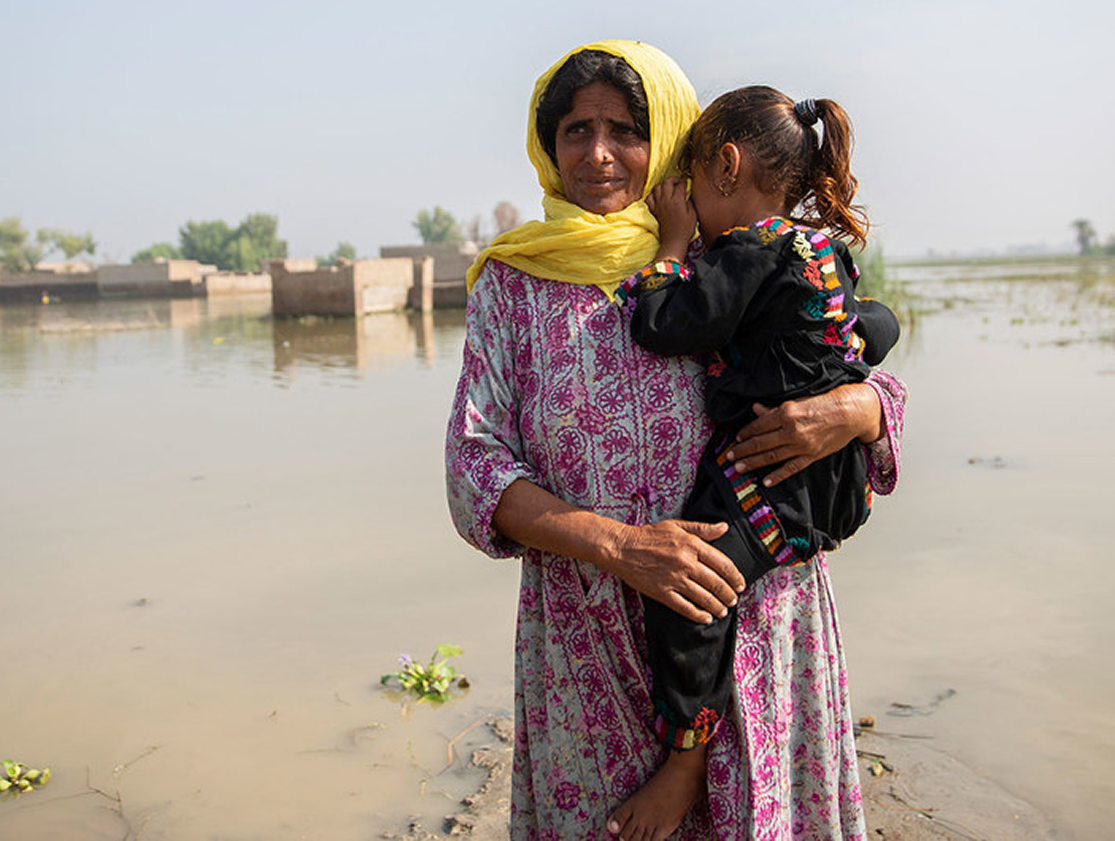
7. Disaster- and Climate-Affected Populations
- Communities affected by floods, climate change, and natural disasters
- Households exposed to economic and environmental shocks
📌 Focus on adaptive and climate-sensitive social protection
8. Marginalized & Excluded Groups
- People in rural and remote areas
- Socially excluded communities
- Newly Merged Districts (NMDs) populations
📌 Addressing geographic and social disparities
Implementation Framework
The strategy adopts a system-based, institutional, and phased implementation approach to ensure effective delivery.
1. Institutional Framework (Lead Authority)
- Establishment of the KP Social Protection Authority (KP-SPA)
- Central body responsible for:
- Policy coordination
- Programme management
- Oversight and governance
📌 Designed to address fragmentation and improve coordination
2. Whole-of-Government Approach
- Coordination across multiple departments and agencies
- Integration of programmes from:
- Social Welfare
- Health
- Education
- Labour
- Strong collaboration with development partners
📌 Emphasis on integrated service delivery
3. Programmatic Implementation (Life-Cycle Approach)
- Interventions structured across life stages:
- Early childhood
- School-age
- Working age
- Old age
- Eight priority programmes (e.g., cash transfers, pensions, job centres, ASP)
📌 Ensures cradle-to-grave protection
4. Integrated Delivery Systems
- Development of:
- Unified Beneficiary Registry
- Integrated MIS (Management Information System)
- Data exchange mechanisms
- Enables better targeting, transparency, and efficiency
📌 Focus on digital and data-driven systems
5. Financing & Sustainability Mechanisms
- Establishment of KP Social Protection Endowment Fund
- Promotion of:
- Contributory schemes
- Efficient resource allocation
- Ensuring long-term financial sustainability
📌 Addressing funding gaps and sustainability
6. Monitoring, Evaluation & Learning (MEL)
- Development of a comprehensive M&E framework
- Regular:
- Performance tracking
- Reporting and evaluations
- Evidence-based decision making
📌 Includes reporting templates and performance analysis
7. Shock-Responsive & Adaptive Systems
- Integration of Adaptive Social Protection (ASP)
- Mechanisms for:
- Disaster response
- Climate resilience
- Rapid scale-up during crises
📌 Critical for climate and disaster-prone KP
Monitoring & Evaluation Arrangements
The strategy establishes a comprehensive, system-driven M&E framework to track performance, ensure accountability, and support evidence-based decision-making.
1. Centralized M&E Framework
- Development of a provincial M&E system for social protection
- Overseen by the KP Social Protection Authority (KP-SPA)
- Covers all programmes across departments
📌 Ensures standardized monitoring and coordination
2. Regular Reporting Mechanism
- Introduction of a Monitoring & Evaluation Reporting Template
- All implementing agencies required to submit periodic data
- Tracks programme design, delivery, and outcomes
📌 Mentioned in reporting framework section
3. Data Systems & MIS Integration
- Use of integrated MIS and registries for real-time tracking
- Data exchange across departments
- Enables:
- Beneficiary tracking
- Performance monitoring
- Transparency
📌 Focus on digital monitoring systems
4. Performance Assessment & Analysis
- Evaluation of programmes based on:
- Efficiency
- Effectiveness
- Adequacy
- Equity
- Sustainability
- Impact
📌 Analytical reviews to inform reforms
5. Evidence-Based Policy & Learning
- Use of:
- Poverty and vulnerability assessments
- Research and data analysis
- Development of policy briefs and reform recommendations
📌 Supports adaptive policymaking
6. Phased Capacity Building
- Year 1–2:
- Data collection and reporting systems strengthened
- Later years:
- Advanced analysis and performance evaluation
- Continuous improvement of service delivery
📌 Gradual strengthening of M&E capacity
7. Feedback & Adaptive Learning
- Iterative improvements based on:
- Monitoring results
- Stakeholder feedback
- Supports adaptive social protection systems
📌 Linked to responsiveness and resilience
Executive Summary
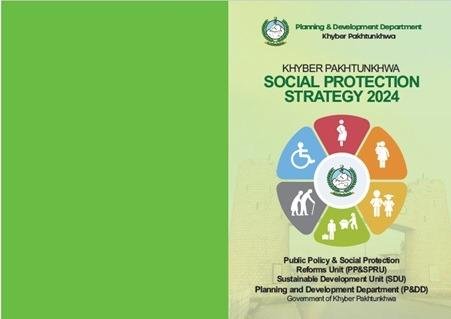
The Khyber Pakhtunkhwa Social Protection Strategy 2024 presents a comprehensive and transformative framework aimed at addressing poverty, vulnerability, and social exclusion in the province through an inclusive, rights-based approach. Building on the KP Social Protection Policy (2022), the strategy seeks to establish an integrated, sustainable, and efficient social protection system that ensures equitable access to essential services and safeguards vulnerable populations.
The strategy responds to evolving challenges such as rising poverty, unemployment, inequality, and climate-induced shocks, which have disproportionately affected low-income households, especially in rural and remote areas. It aligns with national priorities and international commitments, particularly the Sustainable Development Goals (SDGs), and sets out a clear roadmap for implementation during 2025–2030.
At its core, the strategy is structured around four key pillars: social assistance, social insurance, social services, and labour market interventions. These pillars aim to provide immediate relief through cash and in-kind support, ensure long-term risk protection, expand access to essential services such as health and education, and promote employment and livelihood opportunities through skills development and job placement.
A key feature of the strategy is its life-cycle approach, ensuring protection from early childhood to old age, with special attention to women, children, persons with disabilities, and other marginalized groups. It introduces innovative programmes such as conditional cash transfers, graduation programmes for the ultra-poor, old-age pensions, disability support, and climate-sensitive social protection mechanisms to enhance resilience against shocks.
To overcome systemic challenges such as fragmentation and inefficiencies, the strategy proposes strong institutional and governance reforms, including the establishment of the KP Social Protection Authority (KP-SPA), development of integrated data systems (MIS and registries), and improved coordination across departments. It also emphasizes monitoring, evaluation, and evidence-based policymaking to ensure transparency, accountability, and continuous improvement.
Overall, the strategy aims to reduce poverty, strengthen human capital, enhance resilience, and promote inclusive economic development, ensuring that no one is left behind in Khyber Pakhtunkhwa.